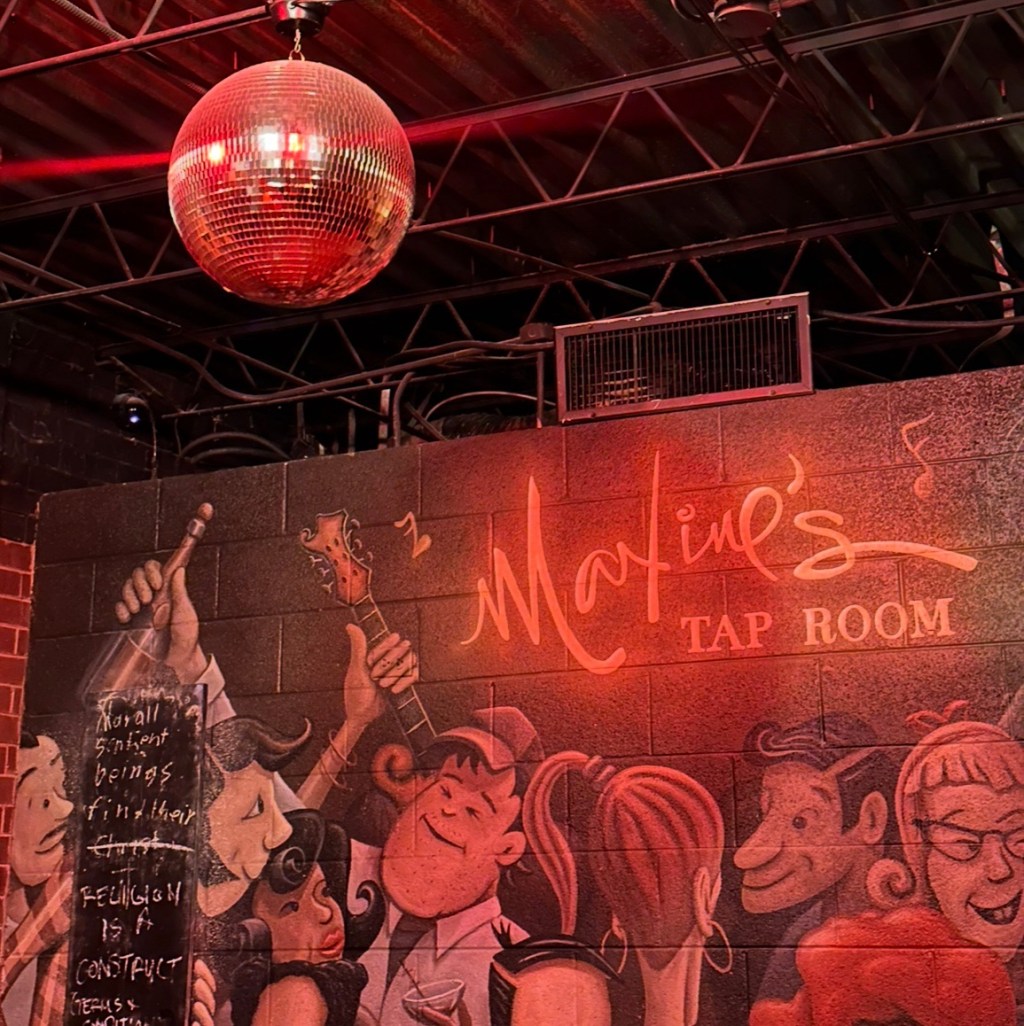
Here’s a little piece of journalism I wrote in May right at the end of the 2025 spring semester. I titled it “Maxine’s After Midnight: What Fayetteville Thinks After Dark.” Fayetteville isn’t half bad! Hope you enjoy the short read and get the opportunity to check out the lovely Maxine’s sometime.
…
Just after midnight on a Thursday, Maxine’s Tap Room feels like a glitch in time. It’s the kind of place you would expect to hear jazz. Or silence. And though visually it hums like a low-voltage wire, the lively attitude and bumping Hard Knock Life (Ghetto Anthem) tell a different story.
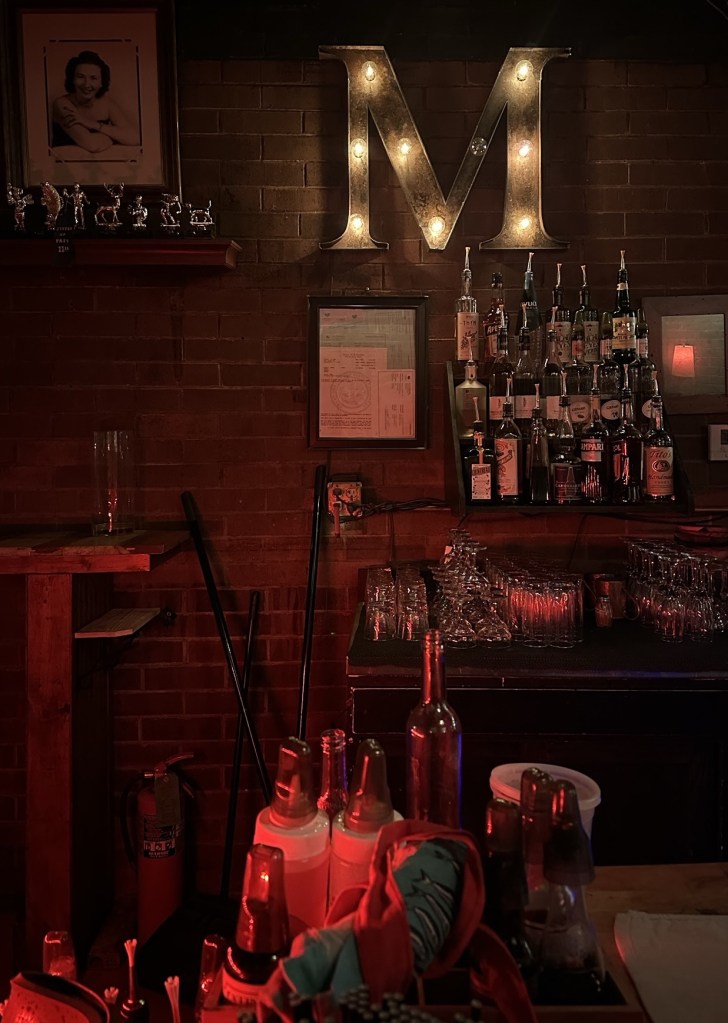
Founded by Maxine Miller in the 1950s, the walls here could speak. Though she couldn’t get a credit card in her own name at the time, Maxine wasn’t overcome by such obstacles. Her charm and everyday presence proved more impactful than social status.
I came here to find out what Fayetteville sounds like after bedtime. What people think about when they know each other by drink rather than name. And though it’s mid-week, the end of the semester brings celebration as finals come to a close.
As I approached the door to enter, a man lit a cigarette and looked down Block Avenue as if waiting for a punchline. A young woman joined him and asked for a hit.

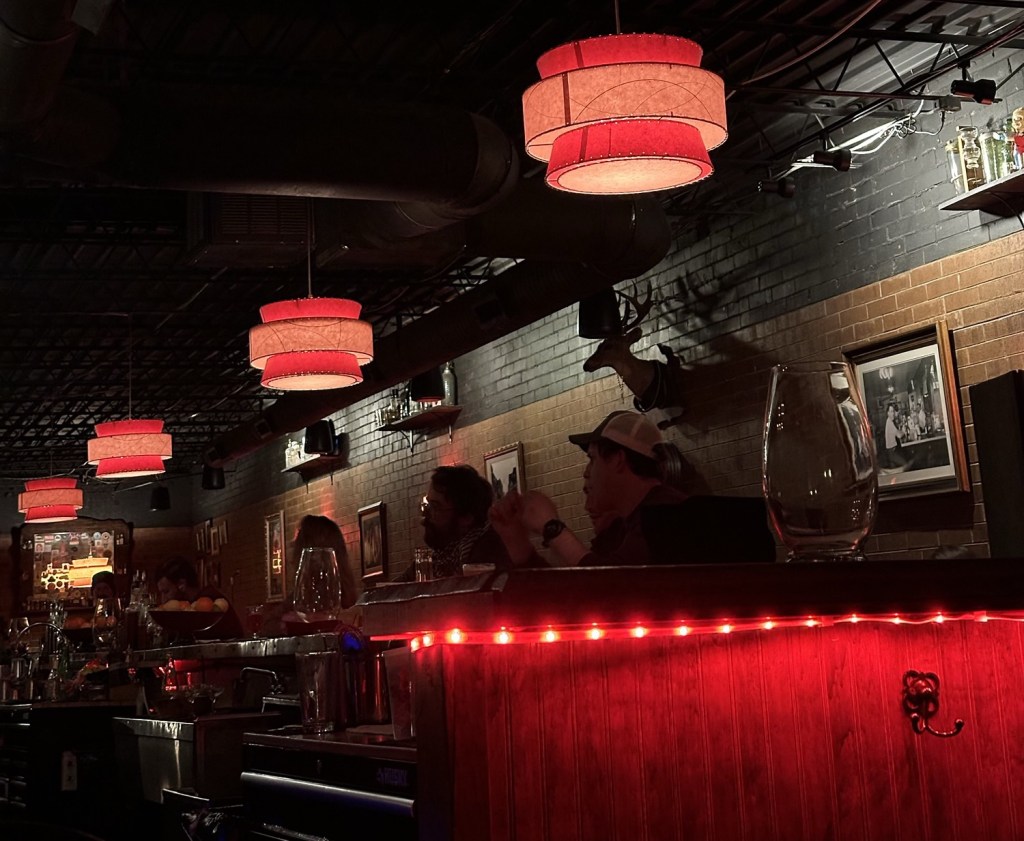
Upon entering and taking a seat at the bar, I couldn’t help but overhear the conversations happening around me in the red-washed lighting. A man defining the “unadulterated” tension between him and his ex-boyfriend. The supposed mysteries surrounding the death of Tusk V permeating the conversation of another.
But what has Maxine’s to say about the culture of Fayetteville? Moreover, what is it that attracts (or should attract) locals to this timeless staple?
Maxine’s preserves a spirit of connection. This bar remains a place where people can come together regardless of context, regardless of background, and exist together within the confines of a dimly lit, bricked-in, multi-generational home. Something is comforting about a place where people have been coming together to laugh, drink, and eat for decades.
Somehow, zeitgeist carries a different meaning here.
Left to wonder what kinds of memories the space has to share, I asked the bartender what he knew. Turns out, while popcorn is the current fan-favorite offered at the taproom, Fritos was the grab in the late 1900s. But not just for people.
“You see where the red brick turns to black there?” said the bartender, pointing it out. “That used to be where the ceiling was.”
The story goes that before a fire in 2006—which occurred just two months after the death of Maxine Miller—the ceiling was notably lower. At some point in the late 1900s, a raccoon took residence in the attic. “You could say it went on for 10 days or 10 years,” continued the bartender, “But Maxine would put a Fritos bag on the end of a broom, lift it up, and out of the darkness a small raccoon hand would come out to take it.”
Clearly, Maxine was a friend to all.
Finding a way to synthesize the traditional value of any given institution with the evolving sensibilities of the present is no simple task. To preserve its legacy but not become outdated. To evolve with the times but not forsake its history.
At Maxine’s, however, the old accommodates the new. There’s a kind of self-awareness that allows for hip-hop music and vintage photographs to jive rather than contradict each other.
Sometimes we forget that history does not belong to the past. History belongs to the present—a current reality soon to become a memory—as a rendition of what came before us. Maxine’s reminds you of that, but gives you space to enjoy it.
The first page of the old, textbook-bound menus tells the story of Maxine’s. It opens, “When Maxine Miller, as a single woman, borrowed money from her parents in 1950 to open a bar, no one could have guessed the longevity of this Fayetteville staple.” The challenges we face along the way make our individual and collective histories richer, vibrant, and more lively.
This is true of our mistakes too—as long as they are recognized.
It’s no wonder Fayetteville loves Maxine’s. While it’s easier to leave these things unsaid and simply engage in conversation with one another, that’s the beauty of a place like this. You recognize a special quality without having to go any further.
It’s the kind of place where you can have unpretentious conversations and enjoy the feeling of timelessness—as well as the stout, well-balanced, and freshly crafted drinks promised in the menu. In reality, it’s a place where you can’t help but know each other by name.
So as the last call comes, I can almost hear the echo of Maxine’s notorious proclamation: “May I have your attention, please! You have ten minutes to drink, and get the hell out!”
 The Way Fayer
Leave a comment